
Two aquifer recharge structures under construction on Comondú's Las Bramonas arroyo, at a cost of 37.5 million pesos
The works in the Santo Domingo Valley are due in December; the state agriculture agency is measuring groundwater levels to assess the aquifer.
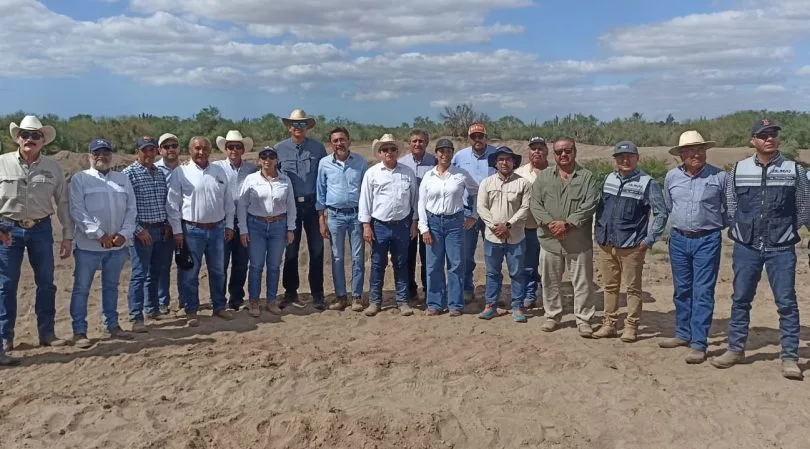
The Baja California Sur state government is building two recharge structures on the Las Bramonas arroyo, in the Santo Domingo Valley in the municipality of Comondú, with an investment of 37.5 million pesos, the state Fisheries, Aquaculture and Agricultural Development Secretariat (SEPADA) said on October 28. The works are meant to help rainwater flowing down the arroyo seep into the ground and recharge the local aquifer, and are scheduled to be finished in December.
SEPADA head José Alfredo Bermúdez Beltrán inspected the works. According to the agency, the project stems from efforts by Governor Víctor Manuel Castro Cosío with the federal government through the National Water Commission (Conagua).
Measuring the aquifer
As part of the follow-up, SEPADA is taking water-level measurements to track changes and assess current aquifer conditions. The agency said local farmers contributed equipment and tools for the work.
Why it matters in Comondú
The Santo Domingo Valley is Baja California Sur's main farming area and relies almost entirely on groundwater, since the region has no permanent rivers. Recharge works act as barriers or structures in the channel that slow rain runoff and give it time to soak in, instead of being lost to the sea.
For farmers and for communities in Ciudad Constitución and the valley, results are not immediate: the benefit depends on rainfall and is measured over seasons. That is why SEPADA's water-level readings will be the benchmark for whether the investment is working.
The agency reiterated the state government's commitment to the primary sector.
Related
The water utility said the main aqueducts were not damaged and that it keeps 24-hour crews on duty; reports are taken at (624) 146-7600.
The nearly 3 million-peso FAISMUN-funded project will serve 2,211 people and is expected to be finished in mid-December.
State health officials report more than 13,000 hectares fumigated and over 1,500 homes visited; rapid tests and free larvicide at Health District 1.
The outage shut down the San Pedro, La Trinidad and Melitón Albáñez wells and the El Carrizal aqueduct; service is returning gradually.