
Two illegal dump sites cleared in Cabo San Lucas' Real Unidad neighborhood
The municipal district office cleaned up two garbage accumulation points and asked residents to report illegal dumping to keep it from returning.
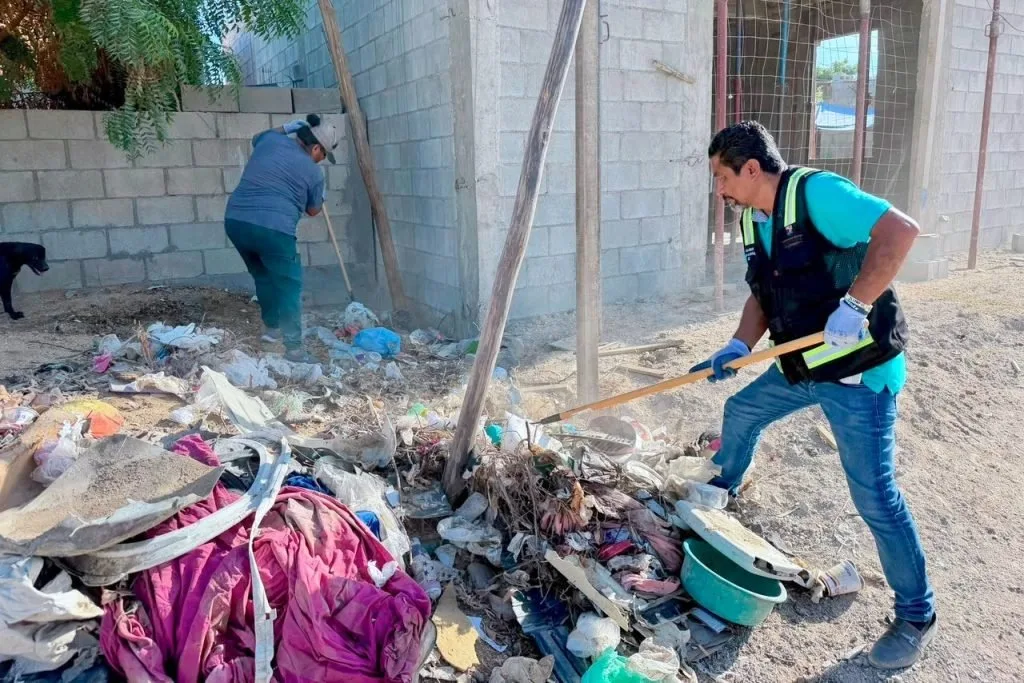
The Cabo San Lucas district office cleared two illegal garbage dump sites in the Real Unidad neighborhood during a cleanup reported this week by the Los Cabos city government. The sites, made up of household waste and rubble left on public land, were cleared by municipal crews.
Cabo San Lucas delegate Karina de la O Uribe led the work alongside subdelegate coordinator Víctor Miranda Urióstegui and subdelegate Rosy Salazar. "Citizen participation is essential to keep neighborhoods clean and orderly," the municipal official said, urging residents not to dump waste on empty lots or street corners.
Illegal dump sites are a recurring problem in the corridor's newer neighborhoods, where piled garbage blocks drainage channels and arroyos. In the middle of the rainy season, those spots become sources of flooding and wash debris toward populated areas when a strong shower hits.
Beyond a one-time cleanup, whether the problem returns depends on residents reporting it. The city asked people to report illegal dumping to the Cabo San Lucas district office or the Public Services Department, giving the exact location so a pickup can be scheduled. Separating waste, putting trash out only during collection hours and using authorized drop-off points all help keep these sites from coming back.
The Real Unidad neighborhood, in the north of Cabo San Lucas, is among those with the fastest population growth in recent years, straining collection services and making waste buildup on undeveloped lots more common.
Related
The sessions with principals and parent associations began Oct. 19 in Guerrero Negro and end Oct. 28 in San José del Cabo.
Fondo de Cultura Económica's Letras Peninsulares route will stop at schools and public spaces with 2,000 titles and free cultural activities.
The city's Commerce Department updated the list; Pancho Barraza, Yuridia and Alejandro Sanz are green, while Julieta Venegas and four others remain under review.
Work includes lighting, playground equipment, benches and perimeter fencing in city neighborhoods, El Centenario and Chametla.