
COEPRIS halts street food sales on streets with sewage water over health risk
The measure applies across the five municipalities where rains left standing sewage water; the goal is to prevent diarrheal illness.
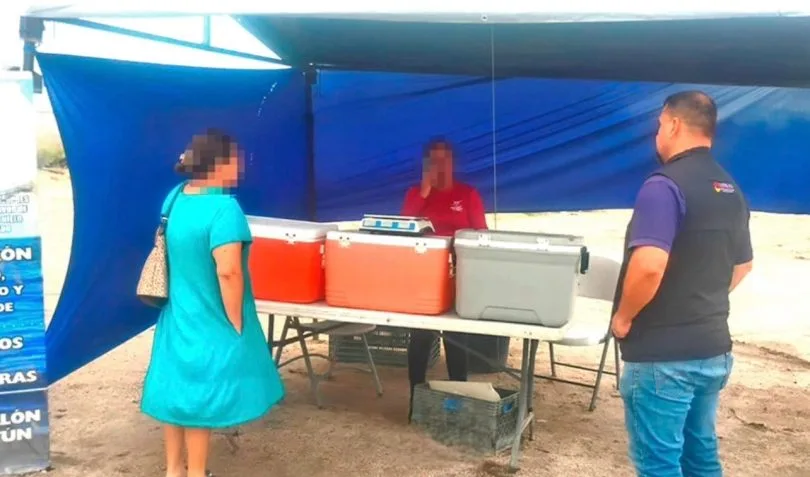
The State Commission for Protection against Health Risks (COEPRIS) temporarily suspended street food sales on roads where rains left standing sewage water, across the five municipalities of Baja California Sur. The order aims to prevent acute diarrheal illness (EDAS) amid a higher contamination risk.
José Manuel Junco Navarro, head of COEPRIS, said the restriction applies anywhere this condition appears, because sewage water increases exposure to pathogens. The suspension is temporary and will be lifted as streets are cleaned and dried.
Acute diarrheal illnesses spread through contaminated food or water and can cause dehydration, especially in children and older adults. The risk grows with summer's high temperatures, which speed the spoilage of prepared foods.
For vendors still operating, the health authority asks them to reinforce hygiene: wash hands frequently, use only potable water, disinfect raw ingredients, separate raw from cooked products and keep proper refrigeration against the heat.
For consumers, the practical advice is to avoid buying food from stalls set over puddles or near sewage, check that handling is clean, and choose well-cooked, hot food. Anyone with symptoms such as persistent diarrhea, fever or signs of dehydration should visit the nearest health clinic.
Irregularities in food sales can be reported to COEPRIS at www.coeprisbcs.gob.mx, which also publishes the health measures currently in force in the state.
Related
The sessions with principals and parent associations began Oct. 19 in Guerrero Negro and end Oct. 28 in San José del Cabo.
Fondo de Cultura Económica's Letras Peninsulares route will stop at schools and public spaces with 2,000 titles and free cultural activities.
The city's Commerce Department updated the list; Pancho Barraza, Yuridia and Alejandro Sanz are green, while Julieta Venegas and four others remain under review.
Work includes lighting, playground equipment, benches and perimeter fencing in city neighborhoods, El Centenario and Chametla.