
La Pasión elevated tank reaches 98% and will boost water pressure for over 2,000 residents in La Paz
The 12-million-peso project adds 150 m³ of storage so more water reaches homes by gravity during rationing days.
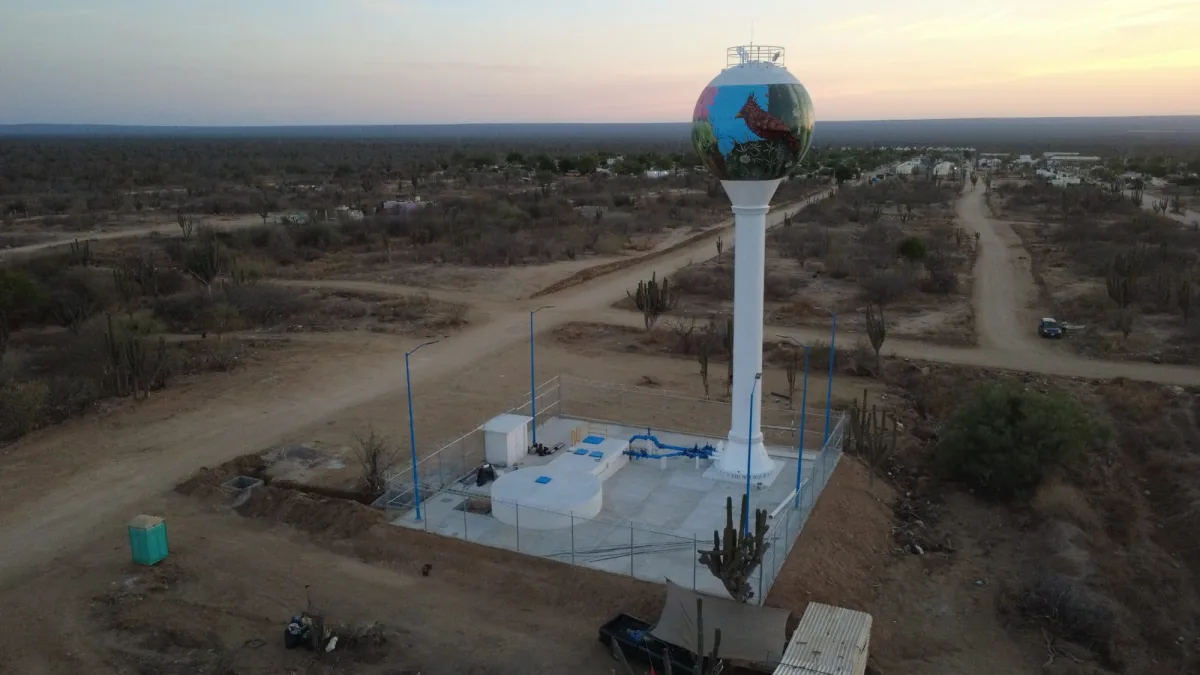
The elevated tank in the La Pasión neighborhood of La Paz has reached 98% physical progress and will benefit more than 2,000 residents by improving water pressure during rationing (tandeo) days, the Municipal Water Utility (OOMSAPAS) reported. The project represents an investment of more than 12 million pesos.
The infrastructure includes a 150-cubic-meter tank and an additional 50-cubic-meter cistern. Final work is underway on the master meter and the inlet line, ahead of operational testing.
"It will increase line pressure by gravity during supply days, helping more water reach homes," said Abimael Ibarra Abúndez, head of OOMSAPAS. The work is part of the Plan Más Agua para La Paz.
In a city where supply runs on a neighborhood-by-neighborhood rationing schedule, higher pressure helps water reach elevated areas that usually come last in the distribution. The utility has reinforced network supply in dozens of neighborhoods during August and is verifying service house by house in areas such as Agua Escondida.
Residents can check their assigned rationing day and time and report leaks or low pressure to OOMSAPAS at 612 123 8600. Keeping rooftop tanks and cisterns in good shape and checking float valves helps make the most of supply hours.
Related
The outage shut down the San Pedro, La Trinidad and Melitón Albáñez wells and the El Carrizal aqueduct; service is returning gradually.
The utility is fixing a break in the 24-inch line that carries seawater to the plant; during the repair there will be rationing in neighborhoods, with priority for schools, hospitals and the most underserved areas.
OOMSAPAS built 1,728 meters of sewer line and 51 household connections for about 4 million pesos in a neighborhood that lacked the service.
The 2,000-page file includes the Environmental Impact Statement and the Technical Justification Study for the project in the Matancitas ejido.